
Bedroom Design Ideas: 27 Ways to Improve Layout, Color, Lighting, and Storage
Use 27 practical bedroom design ideas to improve layout, color, lighting, storage, comfort, and style before spending money on a makeover.
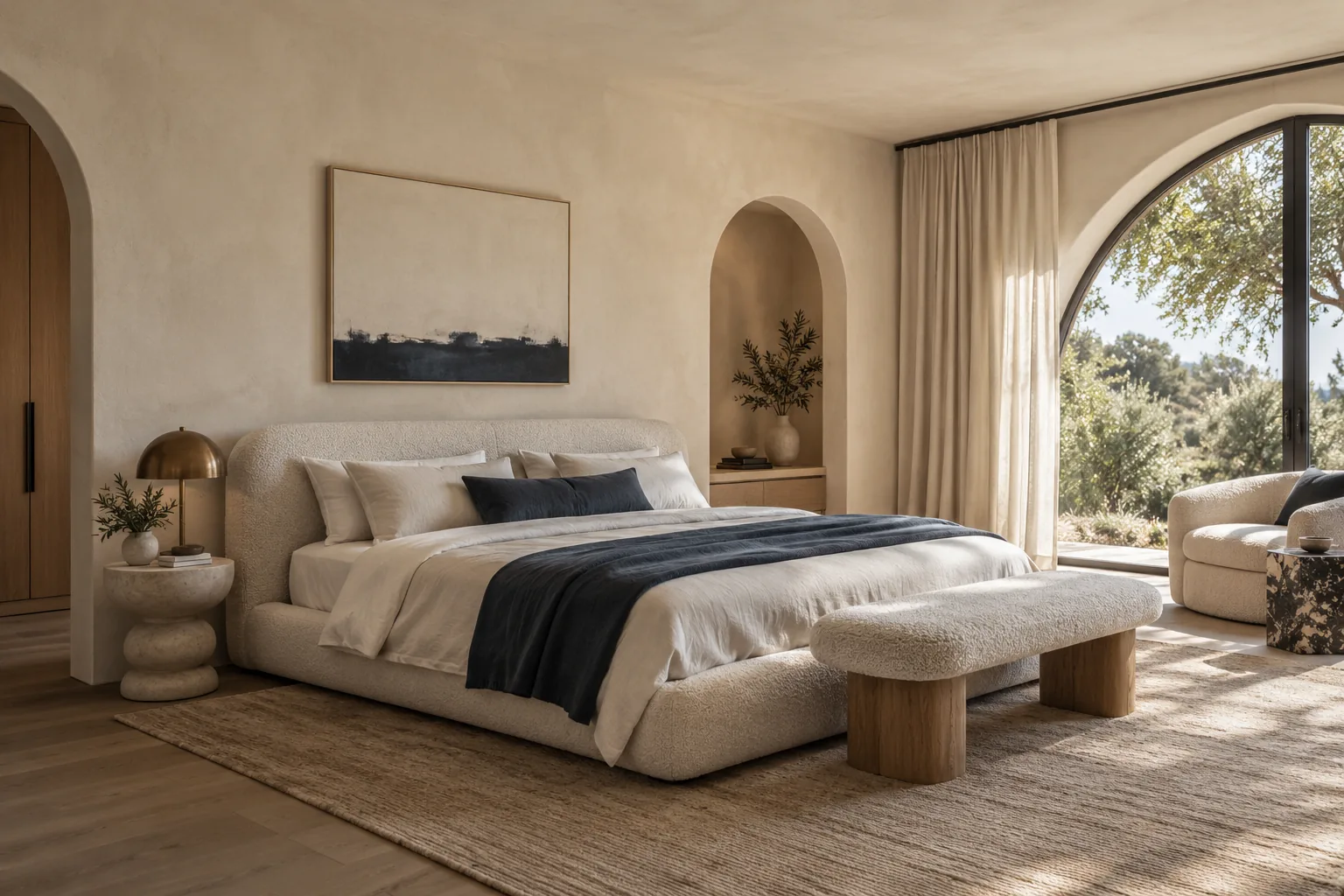
A bedroom can look polished in a photo and still be irritating every single night. The lamp is out of reach. The wardrobe door clips the bed. There is nowhere to put a book except on the floor. And that expensive paint color turns gray and lifeless after sunset.
Good bedroom design ideas solve those small daily frictions before they add decoration. They account for how you enter the room, where morning light lands, what you need beside the bed, and which possessions deserve visible space. The result feels calmer because it works better—not because it follows one particular style.
The 27 ideas below give you a practical order of decisions, from layout and color to storage and sleep. Use the whole plan for a renovation, or choose the section that fixes the problem you notice most.
Start With the Bedroom You Actually Have
The fastest route to an expensive mistake is shopping before you know what the room needs. Spend one evening observing and measuring first. That small pause will improve every decision that follows.
1. Write a five-line room brief
Define the job of the room in plain language. Who sleeps here? What else happens here? What must stay? What currently causes frustration? How should the room feel at 10 p.m.?
A useful brief might read: “Primary bedroom for two people; occasional reading but no desk work; keep the oak dresser; improve clothing storage; make the room feel warm, quiet, and uncluttered.” That is far more useful than “modern luxury,” because it gives you a test for every purchase.
2. Measure the fixed elements before the furniture
Record the room length and width, ceiling height, window dimensions, sill height, door swings, outlets, radiators, vents, and the depth of any alcove. Then measure the furniture you plan to keep. A rough sketch with accurate numbers beats a perfect drawing with guessed dimensions.
Mark the space needed to open drawers and wardrobe doors, too. A 24-inch-deep dresser can require another 18 to 24 inches in front of it before it is comfortable to use.
3. Map the morning and nighttime routes
Draw the shortest path from the door to the bed, bed to bathroom, and bed to wardrobe. These routes should remain clear when a drawer is open or a laundry basket is full. In a compact room, protecting the main path often matters more than creating symmetry.
Imagine making the journey half asleep in the dark. If you would hit a bench, a sharp nightstand corner, or a trailing charging cable, change the layout now.
4. Preview the biggest decisions before buying
A paint sample helps with color, but it cannot show how a larger headboard, warmer palette, or different furniture style changes the whole room. Create two or three visual directions before committing. Keep the camera angle and room architecture consistent so you are comparing the design rather than the photograph.
You can upload a room photo to Best Room Designer at https://bestroomdesigner.com and test different looks before you order furniture or open a paint can. Treat the result as a visual planning aid, then confirm dimensions, materials, electrical work, and construction details in the real room.
Bedroom Layout Ideas That Make Daily Life Easier
Layout comes before style. A beautiful chair that blocks a wardrobe is still the wrong chair.
5. Put the bed on the calmest useful wall
The bed usually works best on a solid wall where you can see the doorway without sitting directly in its path. “Solid” matters: a headboard under a drafty window or against a noisy plumbing wall can make the room less comfortable even when the composition looks balanced.
Some rooms give you only one workable wall. Use it confidently. Center the bed on that wall when circulation allows; shift it when doing so creates a meaningfully wider route to a closet or bathroom.
6. Protect 30 inches of circulation when possible
Aim for roughly 30 to 36 inches of walking space along the sides and foot of the bed in a roomy bedroom. In a small bedroom, 24 inches can work as a practical minimum on the main route. These are planning guides, not building rules, so test the distance with painter’s tape and walk it.
If the room cannot support two comfortable side aisles, choose the side that serves the door, wardrobe, or bathroom and make that route generous. A deliberate asymmetrical layout feels better than two equally cramped gaps.
7. Choose the bed size before every supporting piece
A standard queen mattress is about 60 by 80 inches; a king is about 76 by 80 inches before the frame adds bulk. That 16-inch width difference can remove two nightstands or narrow both paths. Measure the full bed frame, including an upholstered headboard or projecting base—not just the mattress.
When a king leaves no usable floor, a queen with proper bedside surfaces usually feels more luxurious. Space around the bed is part of the bed experience.
8. Match bedside furniture to the mattress height
The top of a nightstand should sit close to the top of the mattress, generally within a few inches. Too low, and reaching for water feels awkward. Too high, and the piece crowds the pillow visually and physically.
You do not need matching tables. A compact chest can add storage on one side while a round pedestal table keeps the doorway side light. Repeat a material, color, or lamp shape to make the pair feel related.
9. Create one clear focal point
Most successful bedrooms have one obvious visual anchor: the headboard wall, a framed view, a dramatic textile, or a piece of art. When the wallpaper, rug, bedding, curtains, and every cushion compete, the room never settles.
Choose the focal point first. Let the other elements support it with quieter color, smaller scale, or simpler pattern.
10. Use the rug to connect the bed, not isolate it
A rug should extend far enough beyond the bed for your feet to land on it. For many queen rooms, an 8-by-10-foot rug works; a king often needs a 9-by-12-foot rug, depending on orientation and frame size. Tape the corners on the floor before ordering.
If a large rug is beyond the budget, use two generous runners along the sides instead of a small mat floating at the foot. The room will look intentional, and the comfort appears where you need it.
Bedroom Color Ideas That Work in Real Light
Color does not exist separately from daylight, flooring, wood tones, and bulbs. The same gray-blue can feel clean in a bright showroom and cold in a north-facing room after dusk.
11. Treat paint as a light-dependent material
Test large samples on at least two walls and check them in the morning, afternoon, and after dark. Keep the sample next to the floor, curtains, and largest piece of furniture. Undertones become easier to spot when the permanent materials are in view.
Homes & Gardens reported in 2026 that designers were seeing cool colors fail when people assumed cool automatically meant calm. The useful lesson is broader: judge the complete room under its real light, not a paint chip by itself.
12. Build the palette from one fixed item
Start with the least flexible element: existing carpet, a wooden bed, a favorite rug, or curtains you cannot replace. Pull one main wall color, one supporting neutral, and one accent from that item. You will avoid the common problem of choosing a beautiful wall color that argues with everything already in the room.
For example, a rug with tobacco, cream, and muted blue can lead to warm ivory walls, medium wood, and small blue accents. The palette feels layered without becoming busy.
13. Use warm neutrals when plain white feels unfinished
Cream, mushroom, putty, plaster, and pale clay give a quiet room more depth than sharp white. They also sit comfortably beside oak, walnut, linen, wool, and brass—the materials already found in many bedrooms.
Warm does not mean yellow. Compare several muted samples and reject any that become peachy or green in your evening light.
14. Let a dark color create intimacy
Small bedrooms do not have to pretend they are large. Deep olive, aubergine, smoky navy, or brown-red can make a compact room feel protected and complete. Keep the finish matte, repeat the color in a textile, and add warm pools of light so the result feels enveloping rather than gloomy.
If four dark walls feel risky, begin with the headboard wall and carry the color onto the trim. That small continuation makes the choice look considered.
15. Color-drench a visually fragmented room
Painting walls, trim, doors, and sometimes the ceiling in related tones reduces the number of hard visual stops. It is especially effective in attic rooms, bedrooms with several doors, or spaces broken up by awkward angles.
The colors do not have to match exactly. Try walls in a soft matte finish and trim one step deeper in a more durable sheen. The subtle change creates dimension without chopping the room into stripes.
Bedroom Lighting Ideas for Morning, Reading, and Rest
One bright ceiling fixture cannot do three different jobs well. Bedrooms need enough light to get dressed, focused light to read, and low light to wind down.
16. Build three lighting layers
Use ambient light for general visibility, task light at the bed or dressing area, and accent light to soften the room. A simple combination might be a dimmable ceiling fixture, two wall-mounted reading lights, and a shaded lamp on the dresser.
Turn each layer on separately. If the room feels flat until every fixture is blazing, the light sources are too similar or too exposed.
17. Put bedtime controls within reach
A bedside light should switch off without forcing you out of bed. Plug-in sconces, touch lamps, smart bulbs, and remote switches can solve this without rewiring. Keep controls obvious enough that a guest can understand them.
For two sleepers, give each person independent reading light. One shared lamp in the middle looks neat but makes different sleep schedules harder.
18. Make window treatments work in two modes
Combine a light-filtering layer for daytime privacy with a blackout or room-darkening layer for sleep. Hanging curtains high and wide can make the window feel larger while reducing gaps at the sides. Let the panels reach the floor rather than stopping at the sill unless furniture makes that impossible.
Check for streetlights after dark. A curtain that appears opaque in daylight may glow once the room is dark.
19. Use warm, low-glare light late in the day
Choose shaded or diffused light near eye level and keep it dim in the hour before sleep. Around 2700K is a useful starting point for a warm bedroom lamp, though the shade material and wall color will change how it reads.
The Sleep Foundation notes that light is a powerful cue for circadian rhythm and recommends a dark bedroom plus low-color-temperature, low-illuminance lighting near bedtime. The practical version: stop treating the ceiling light as the only switch in the room.
20. Light the wardrobe without flooding the bed
Motion-activated LED strips inside a wardrobe make dark clothing and deep shelves easier to use. At a dressing area, position light in front of your face rather than directly overhead to reduce harsh shadows.
If one person gets ready earlier, a focused wardrobe or mirror light can protect the other person’s sleep. That is a small design decision with daily value.
Bedroom Storage Ideas That Reduce Visual Noise
The goal is not maximum storage at any cost. It is enough storage in the places where clutter actually appears.
21. Give the dead zones a specific job
Look under the bed, above a wardrobe, behind the door, below a window, and at the unused end of a wall. Assign one category to each useful zone. Lidded under-bed boxes might hold seasonal bedding; a shallow wall rail can hold tomorrow’s clothes.
Avoid filling every possible gap. Empty floor and wall space gives the eye somewhere to rest.
22. Use vertical storage without building a heavy wall
Tall wardrobes and shelves use the room’s volume efficiently, but a solid block of cabinetry can overwhelm a small bedroom. Break it with an open niche, a lighter finish, integrated handles, or a section that stops below the ceiling.
Keep daily items between waist and shoulder height. Store luggage, spare duvets, and other infrequent items at the top.
23. Hide high-friction clutter and display a little
Chargers, medication, tissues, sleep masks, and loose receipts create more visual noise than one shelf of books. Give the practical items a drawer, box, or lidded basket within arm’s reach. Then leave one or two surfaces available for objects you genuinely enjoy seeing.
Closed storage calms the room; a small amount of open display keeps it personal. You need both.
24. Make small furniture perform two jobs
A storage bench can hold spare bedding, but only add one if there is room to walk around it. A dresser can replace a nightstand. A wall-mounted shelf can serve as a bedside table without taking floor space. In a guest room, a slim desk can double as a dressing table.
Multifunctional does not mean mechanically complicated. The best double-duty pieces simply have the right size, surface, and storage for two familiar tasks.
Add Warmth, Texture, and Personality
Once the room works, add the elements that make it yours. Texture usually creates a richer result than adding more colors.
25. Layer bedding by feel, not by pillow count
Start with breathable sheets, add a duvet or quilt suited to the season, then use one throw or coverlet for texture. Two sleeping pillows per person and one or two decorative cushions are enough for most beds. A mountain of cushions turns bedtime into cleanup.
Vary the surfaces within a narrow palette: crisp cotton, washed linen, nubby wool, and a smooth upholstered headboard. The room gains depth while remaining quiet.
26. Design the headboard wall as one composition
Consider the headboard, bedside tables, lamps, and art together. A wide headboard can visually connect mismatched nightstands; pendant lights can free their surfaces; one large artwork can replace a scattered grid.
Check the total height from floor to the top of the artwork. If everything ends at mattress level, the room will feel bottom-heavy. A tall headboard, vertical lamps, or higher art can pull the eye upward.
27. Add one personal element that cannot be bought as a set
Use a family photograph, a handmade textile, travel sketch, inherited stool, or old wooden box. Personal objects stop a bedroom from reading like a furniture showroom. One strong piece often carries more character than ten generic accessories.
Designers quoted in recent 2026 trend coverage are moving toward layered, individual rooms and away from anonymous blue-gray schemes. Follow the useful part of that shift: choose items connected to your life, not items purchased only because they are current.
Design the Room for Sleep, Not Just Photographs
A bedroom earns its keep at night. Its most important qualities are difficult to see in a styled image: darkness, quiet, temperature, air, and the absence of small irritations.
The Sleep Foundation describes a dark, quiet, comfortably cool room as a stronger setting for rest and gives a broad temperature range of 60 to 71 degrees Fahrenheit, or 15.6 to 22 degrees Celsius. Your comfortable point will vary, but the principle is useful: solve heat, noise, glare, and stale air as part of the design.
Try these changes before buying more decor:
- Seal light gaps around curtains and cover bright standby lights.
- Move the phone charger beyond arm’s reach, or charge outside the room.
- Use a rug, lined curtains, upholstery, and fabric shades to soften echo.
- Keep a clear path to the bathroom and a low, warm night light if needed.
- Ventilate regularly and address dampness or mold rather than masking odors.
- Remove work equipment from sight at night, even if it only goes into a closed cabinet.
The “analog bedroom” appearing in 2026 design coverage is useful because it aligns appearance with behavior. A hidden television, one charging drawer, and a real book beside the bed may improve the room more than another decorative object.
Three Makeover Plans for Three Budgets
Good design is a sequence of priorities. Use the tier that matches your room and stop when the problem is solved.
Under $250: remove friction and reset the palette
Rearrange the furniture, patch visual clutter, and change the light before buying a major piece. Spend on large paint samples, warm bulbs, cable control, drawer organizers, and one textile that connects the palette. Move art you already own into a stronger composition.
Example: keep the bed and dresser, shift the bed six inches to widen the wardrobe route, replace two exposed bulbs with shaded 2700K lamps, add blackout lining, and repeat the rug’s rust color in one throw.
$250 to $1,000: improve the room’s weak system
Choose the system that causes the most frustration: window treatment, lighting, storage, or bed wall. Solve that system properly instead of spreading the budget across small accessories. A well-fitted curtain track or a pair of wall lights changes daily use more than a cart full of decor.
Before spending, compare two or three complete directions with Best Room Designer. If one concept only works after replacing every piece, while another uses your existing bed and dresser, the second may deliver a much better return.
Above $1,000: invest in fit and longevity
Custom or semi-custom storage, electrical work, a quality mattress, lined curtains, and durable flooring can justify the larger budget. Confirm site measurements and installation details with qualified professionals. Build a 10 to 15 percent contingency into renovation spending, especially when walls, wiring, or old built-ins are involved.
See current tool options on the pricing page at https://bestroomdesigner.com/pricing before deciding how many room concepts you want to compare.
Bedroom Design Mistakes That Cost More Later
Buying the largest bed that technically fits. “Fits” must include the frame, walking space, door swing, drawers, and the way you make the bed.
Choosing paint under one light. A color that works at noon may fail under your evening bulbs. View the sample across a full day.
Using only an overhead fixture. It creates glare when you want to relax and shadows when you dress. Add lower, shaded sources.
Filling the room with small furniture. Too many undersized pieces create more edges and more clutter. Fewer correctly scaled pieces usually feel calmer.
Copying a photograph without copying its conditions. A dark hotel room may rely on tall ceilings, hidden architectural lighting, and daily housekeeping. Adapt the idea to your windows, habits, and maintenance tolerance.
Treating storage as the final step. Storage determines bed size, wall use, and circulation. Plan it with the layout.
Which 2026 Bedroom Trends Are Worth Keeping?
Trend reports for 2026 point toward richer burgundy, plum, terracotta, drapery, statement headboards, tactile materials, and rooms with less visible technology. Those details can date, but the underlying needs are durable: warmth, acoustic softness, personal identity, and fewer distractions.
Borrow the principle rather than the entire look. You might add a muted clay throw instead of painting four walls burgundy, use full-height curtains instead of installing a canopy, or hide charging cables instead of attempting a completely device-free bedroom.
The strongest trend is permission to make the room specific. A bedroom designed around your light, routines, possessions, and sleep will outlast a perfect copy of this year’s most shared image.
Your 30-Minute Bedroom Design Plan
Do one short planning session before you shop:
- Photograph all four walls in daylight.
- Measure the room, openings, bed, dresser, and wardrobe clearance.
- Write the five-line brief from idea one.
- Mark the three daily paths on a sketch.
- Choose the single biggest problem to solve first.
- Create or preview two contrasting directions.
- Set a budget for that first problem and leave the rest for phase two.
Then make one physical change today. Move the lamp within reach. Clear the path to the bathroom. Tape out the correct rug size. A useful bedroom is built through specific decisions, and the next good decision should be visible before the next purchase arrives.
References
- Architectural Digest, 46 Small-Bedroom Ideas for When Your Bed Takes Up the Whole Damn Room — https://www.architecturaldigest.com/gallery/best-small-bedroom-ideas
- Martha Stewart, How to Decorate a Bedroom From Start to Finish, According to Interior Designers — https://www.marthastewart.com/how-to-decorate-a-bedroom-12013408
- House & Garden, 97 Bedroom Ideas for Every Style of Interior — https://www.houseandgarden.co.uk/gallery/bedroom-ideas
- Sleep Foundation, How to Set Up a Bedroom for Better Sleep — https://www.sleepfoundation.org/bedroom-environment/how-to-design-the-ideal-bedroom-for-sleep
- House Beautiful, These Are the Top Bedroom Trends of 2026, According to Designers — https://www.housebeautiful.com/design-inspiration/a69619733/bedroom-design-trends-2026/
- ELLE Decor, 3 Major Bedroom Trends Designers Say Will Define 2026 — https://www.elledecor.com/design-decorate/a70001124/bedroom-design-trends-2026/
- Homes & Gardens, The One Mistake Designers Say Not to Make When Choosing a Bedroom Color — https://www.homesandgardens.com/decor/bedrooms/bedroom-color-mistake