
Trace the route of rainwater
Use your photo to discuss roofs, paths, paving, and low areas that may feed runoff toward a garden.
RAIN GARDEN DESIGN IDEAS
Start with a photo of your yard. Explore how a planted low area, a clear water path, and locally suitable plants might look together before planning any groundworks.
Explore rain garden directions
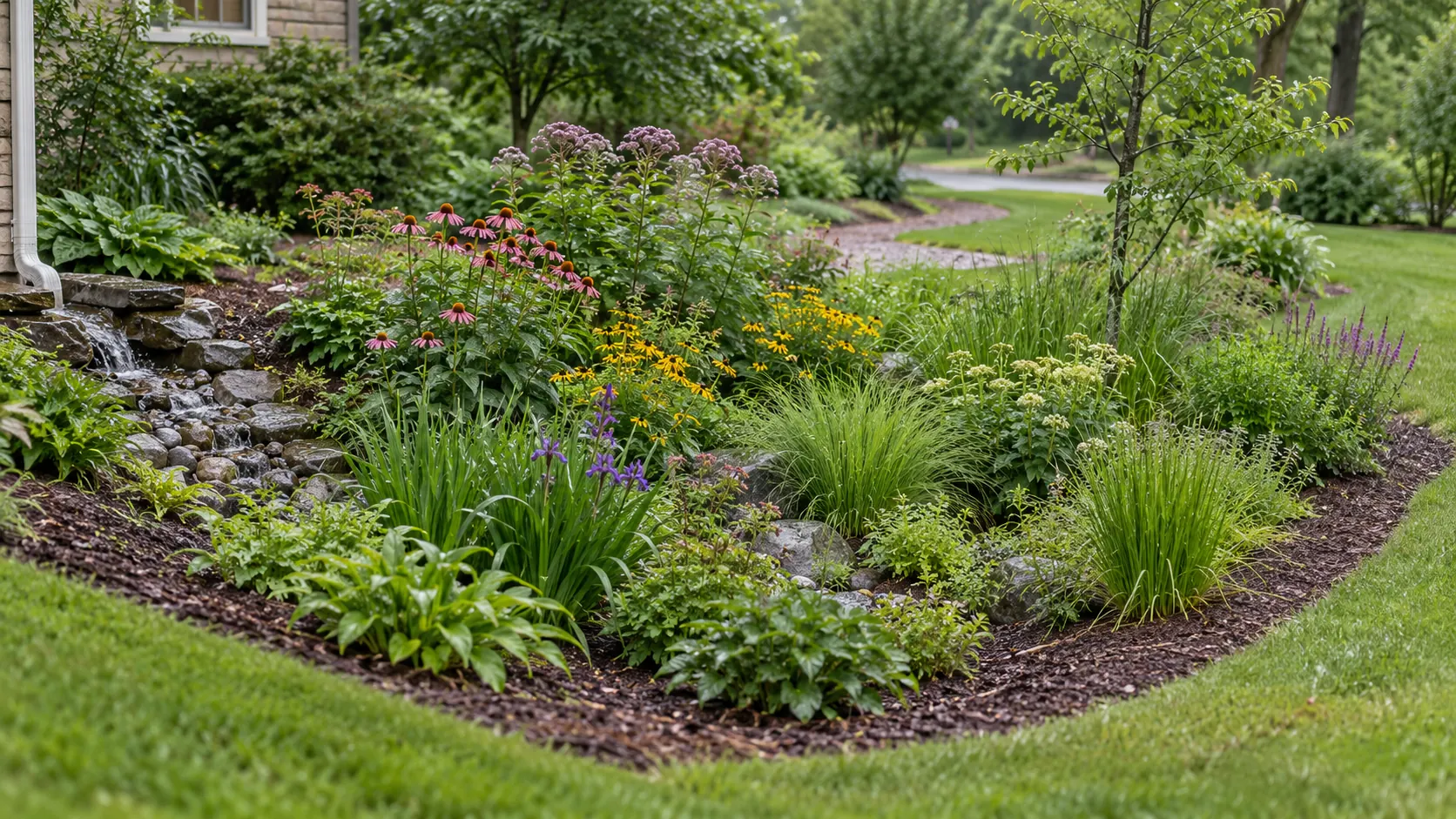
A rain garden idea needs to consider where runoff arrives, how a planted basin fits the space, and what happens when it is full.
Use your photo to discuss roofs, paths, paving, and low areas that may feed runoff toward a garden.
Explore grasses, sedges, perennials, and shrubs as a visual composition. Check exact plants for your climate and wet-to-dry conditions.
Compare meadow-soft borders, mulch, stone, and more structured edges without losing access or existing features.
Turn a visual direction into a useful conversation about soil infiltration, overflow, utilities, foundations, and local requirements.
RAIN GARDEN DESIGN IDEAS
Share the real yard, explain what happens during rain, and refine a planting concept before any digging.
Include the area where water collects, nearby paving, paths, downspouts, and features you want to keep.
Mention your location, sun or shade, soil observations, where runoff comes from, and how you use the space.
Compare planting, edges, and access. Verify drainage, siting, utilities, and plant suitability locally before building.
RAIN GARDEN INSPIRATION
These images explore appearance and setting. They are illustrations of possibilities, not site-specific drainage plans.
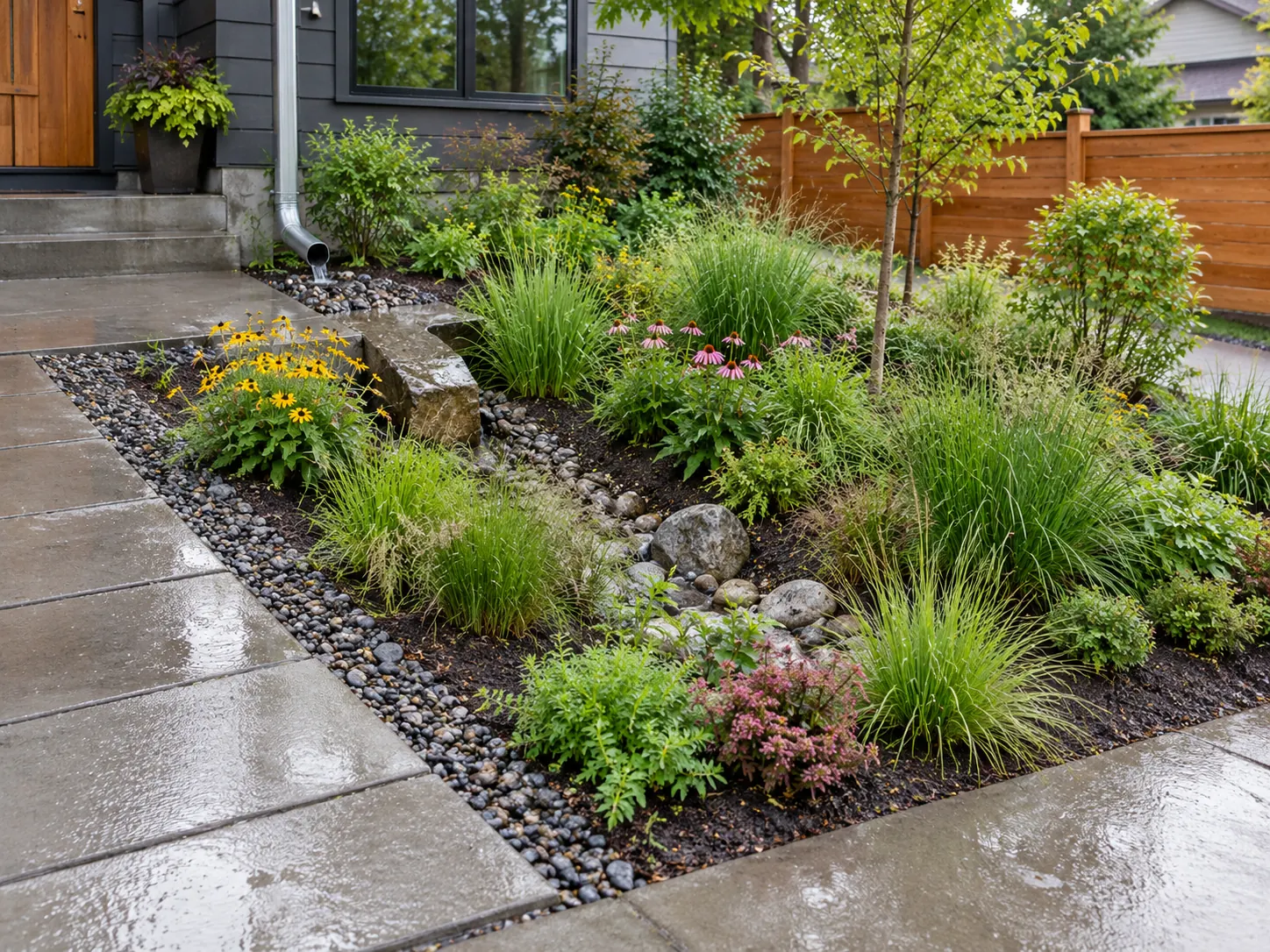
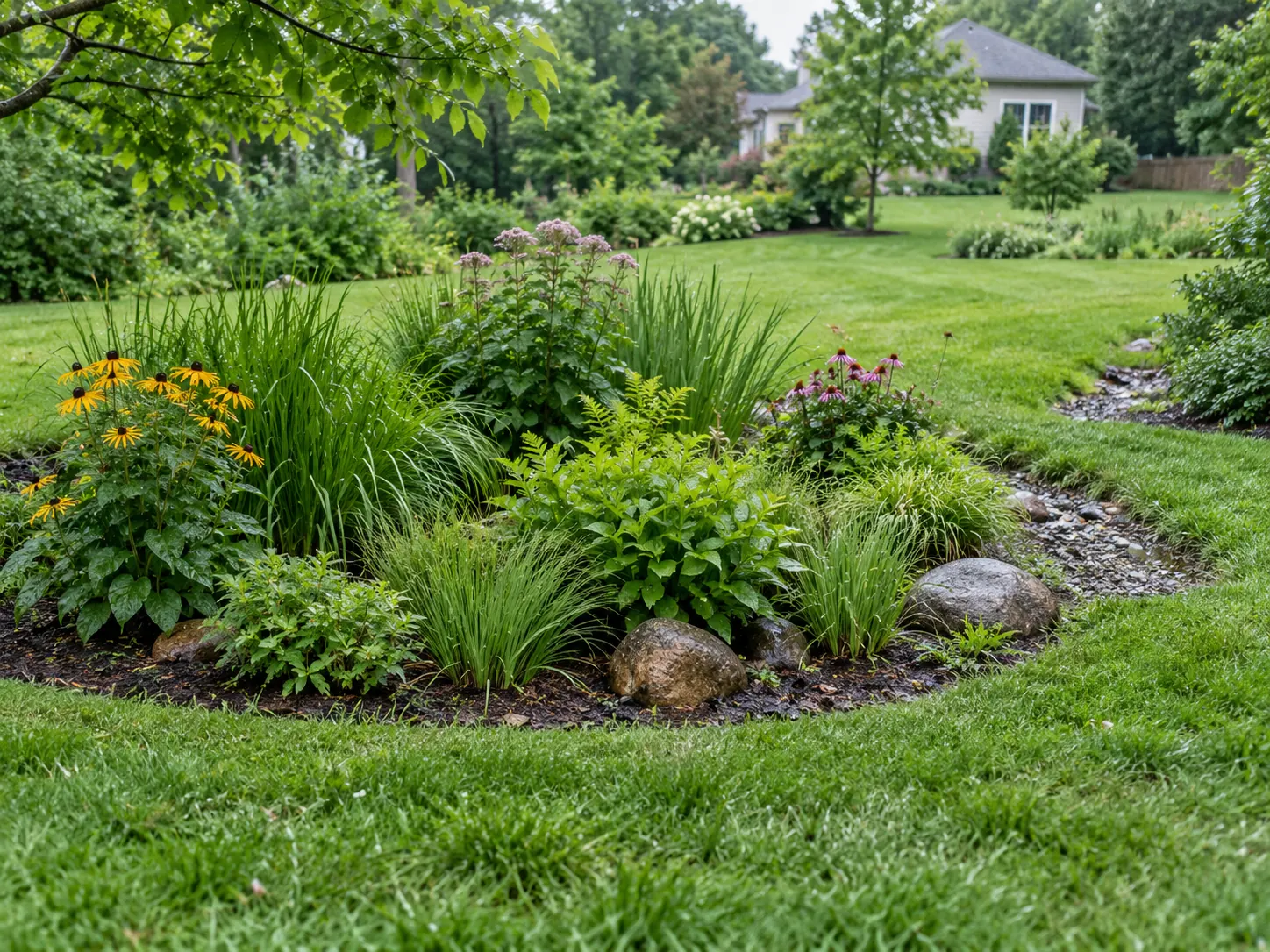
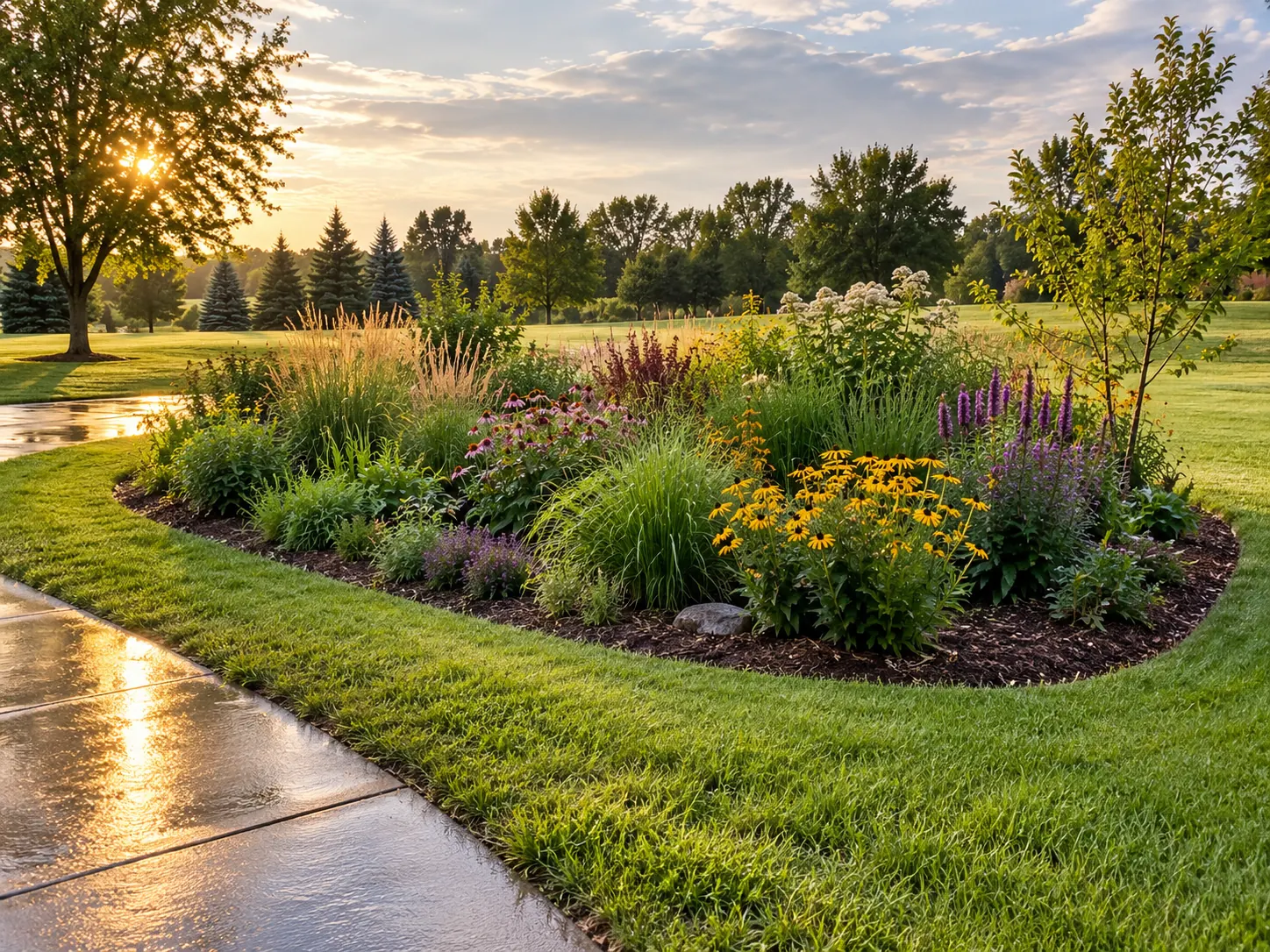
A useful concept starts with an observed route for rainwater, then makes space for planting and a safe overflow path. A photo helps communicate the idea, while soil and drainage checks determine whether the location works.
A rain garden can be wet after a storm and dry between storms. Compare shapes, heights, and seasonal interest first; choose actual species only after checking local climate, light, soil, and water conditions.
Explore a planted area that fits around an existing walk, lawn, and view from the street.
Compare compact planted borders while leaving safe access and a route for excess water.
Visualize a garden that suits an observed low area, then check whether water can enter and drain appropriately.
AI images and text cannot measure soil infiltration, calculate stormwater capacity, locate buried utilities, or approve a site. Before digging, ask a qualified local professional to check drainage, overflow, distance from structures, plant suitability, and local requirements.
Read the US EPA rain garden guideRAIN GARDEN QUESTIONS
Bring a yard photo and your observations about water, sunlight, and the space you want to keep.